Start a profitable POS business as a student in Nigeria. Learn setup costs, how to get a POS machine, the best providers, and how student entrepreneurs can earn up to ₦600,000 monthly.
Introduction
In the past few years, the POS business has spread rapidly across Nigeria. If you’re a student, you don’t need statistics to know this—just step outside your hostel, campus gate, or off-campus area. You’ll likely find at least one POS agent operating under an umbrella or kiosk.
There are now over 2.7 million POS terminals in Nigeria, processing close to ₦18 trillion every year. At first glance, it might feel like the market is already saturated, especially around student areas. But the reality is different: demand still outpaces supply.
Nigeria remains a cash-driven economy. Students, lecturers, traders, bike riders, and campus vendors all rely heavily on cash withdrawals and transfers. Long ATM queues, network issues, and distant bank branches make POS agents essential.
For student entrepreneurs looking for a low-barrier business that can run alongside lectures, exams, and personal commitments, POS businesses stand out. They don’t require millions in capital, advanced skills, or full-time commitment—and they offer steady daily cash flow.
If you’re a student thinking about starting a POS business in 2025, this guide breaks down how the business works, what you need to start, and how tools like Kuda Business can help you operate professionally even as a student.
What Is a POS Business?
As a student in Nigeria, you’ve definitely used a POS at least once—probably many times. POS means Point of Sale, and it refers to systems that allow electronic payments and cash transactions.
Running a POS business means helping people meet everyday financial needs, including:
- Withdrawing cash
- Sending money (bank transfers) and making deposits
- Buying airtime and paying utility bills
The people who run these businesses are called POS agents. In many student communities, POS agents function like mini-banks—especially where banks are far from campus or ATMs are unreliable.
For students, this business is attractive because it allows you to serve people around you while earning commissions on each transaction.
Different Ways Students Can Run a POS Business
There isn’t just one way to operate a POS business. As a student entrepreneur, your choice depends on your schedule, location, and capital.
1. Agency Banking
This is the most common model. You partner with a bank or fintech, receive a POS terminal, and act like a small banking outlet. You help customers withdraw cash or send money, and you earn commissions per transaction.
This model works well around hostels, off-campus housing, markets, and transport hubs near schools.
2. Merchant Services
This is common in shops and supermarkets. Business owners use POS terminals to accept card payments or transfers from customers.
Some student entrepreneurs combine this with agency banking—especially those who already run small campus businesses like printing, food vending, or mini-marts.
3. Mobile POS (SoftPOS)
This option turns your smartphone into a POS terminal using an app. It’s ideal for students who are always on the move or don’t have a fixed stall yet.
What You Need to Start a POS Business in Nigeria as a Student
1. Capital
You don’t need millions to start a POS business, but you do need some capital. The amount depends on your location, expected customer volume, and POS provider.
For student entrepreneurs, startup costs are usually lower if you operate from:
- A hostel front
- Your off-campus apartment
- A shared kiosk near school
Use this as a rough guide when budgeting for your POS business.
2. Paperwork
Even as a student, you need proper documentation. This helps you look credible and avoid future issues.
You’ll need:
- Business name registration (CAC): Affordable and builds trust
- A valid ID: NIN, voter’s card, or driver’s licence
- Proof of address: A recent electricity (PHCN) bill
- Your BVN and a bank account: So commissions can be paid to you
If you don’t want to queue at a bank branch, Kuda Business allows you to register your business and open a full business account directly from your phone.
How to Get a POS Terminal
1. Through a Bank
Traditional banks offer POS terminals, but the process can be slow. You’ll likely fill forms, submit documents, and wait for approval.
2. Through a Fintech
Fintech companies and modern banks have made this easier. You can request a POS terminal online and get it faster—without visiting a physical branch.
3. Through a Certified POS Provider
You can also buy directly from trusted POS providers. Be careful: avoid random sellers and social media ads, as fake terminals are common.
Step-by-Step Guide for Student Entrepreneurs
1. Register Your Business and Choose a Partner
Even if you’re starting small, registering a business name helps you look serious.
2. Get a POS Terminal and Cash
Once your terminal arrives, you’ll need cash. POS businesses can’t function without liquidity, so plan how you’ll always have cash available for withdrawals.
3. Choose a Strategic Location
Location determines success. As a student, aim for:
- Hostel entrances
- Busy campus routes
- Markets or food areas near school
Visibility matters. Use a simple kiosk or umbrella and make sure people can see you clearly.
4. Be Friendly and Professional
Trust is everything. Students and staff will return to the agent who treats them well. Stay calm during network issues and explain delays clearly.
5. Promote Your Business
Don’t sit quietly and hope people notice. Put up a small sign like “POS Available Here”. Tell classmates, neighbours, and hostel mates.
The Best POS Providers in Nigeria
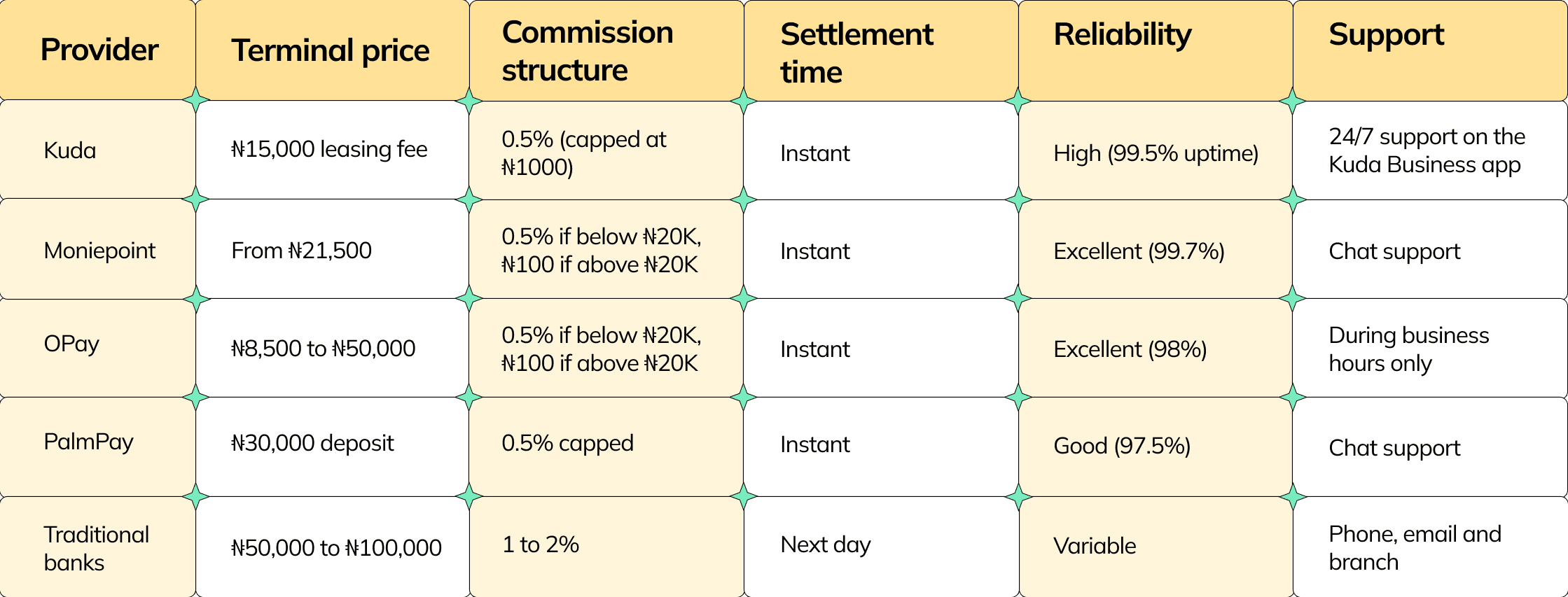
Note: You can’t currently use a Kuda POS terminal to run a POS business, but you can use Kuda Business accounts to manage transactions and track income efficiently.
Is a POS Business Profitable for Students?
Profit Margins and Daily Income
POS agents typically earn:
- ₦50–₦100 per cash withdrawal
- ₦10–₦50 per transfer
With steady traffic, a student-run POS business can generate ₦8,000–₦12,000 daily, translating to ₦240,000–₦360,000 monthly—depending on location and demand.
Expenses to Consider
Not all earnings are profit. Monthly expenses may include:
- ₦2,000–₦5,000 for internet data
- Kiosk or space rent
- Staff salary (if you hire help)
- Constant cash float
With Kuda Business, you avoid hidden charges and account maintenance fees, helping you keep more of what you earn.
How Student Entrepreneurs Can Earn More
- Encourage more withdrawals
- Sell airtime, data, and electricity tokens
- Fund betting wallets
- Be approachable—students prefer friendly agents
- Partner with nearby shops that don’t have POS terminals
Common Challenges and How to Solve Them
Network Downtime
Always have a backup SIM card or an alternative terminal.
Scams
Never give out cash until the money reflects in your banking app. SMS alerts can be fake—always confirm inside the app.
Poor Record-Keeping
Avoid notebooks. Use the Kuda Business app to track transactions automatically and understand your daily profit clearly.
FAQs
1. Can a student start a POS business with ₦50,000?
Yes. ₦10,000–₦15,000 for the POS terminal, ₦30,000 cash float, and ₦5,000–₦10,000 for setup.
2. How long before I break even?
Usually one to three months. In busy student areas, it can be even faster.
3. Can I run the business from my hostel or home?
Yes—if the location is busy and matches your registered address.
4. How much can I make monthly?
Depending on traffic, POS agents in Nigeria earn over ₦70,000 monthly, with many student entrepreneurs earning significantly more.
Conclusion
For student entrepreneurs in Nigeria, starting a POS business is one of the easiest ways to build income without massive capital or technical skills. With a good location, honesty, and consistency, you can grow steadily while balancing school life.
Start small, learn on the job, and let the business grow with you.
This article was originally written by Kuda Blog and rewritten for a student audience