The New Science Behind Scoring 300+ in Nigeria’s Toughest Exam UTME/JAMB. For years, the idea of scoring 300 and above in the UTME carried a kind of mythological weight. It was something parents bragged about, teachers whispered about, and students admired from afar.
The 300+ scorers were treated almost like prodigies the “chosen ones” who somehow cracked the code the rest of the population was struggling to understand.
However, in 2025, the narrative has changed. Those high scores are no longer mystical. They are not reserved for a select tribe of “born brilliant” kids. They are increasingly achieved by students who have discovered what most others haven’t: UTME success today is more science than luck, more strategy than intelligence, and more structure than sheer effort.
With competition intensifying and cut-off marks for Medicine, Law, Nursing, and Engineering rising each year, students now realize that excellence is no longer optional. It is the ticket to getting ahead in a system where millions compete for limited spaces. And academies like Student Village Academy have stepped into this gap, building an ecosystem that treats exam preparation as a strategic project rather than a stressful gamble.
Why Scoring 300+ Matters More Than Ever
The UTME has always been competitive, but the landscape has shifted. With over a million candidates applying each year and universities struggling with limited capacity, a high score has become more than bragging rights — it is leverage.
A score above 300 automatically:
- Puts a student in the top percentile of candidates
- Gives them priority consideration for competitive courses
- Reduces the influence of catchment areas and internal politics
- Provides a strong foundation before even reaching Post-UTME
- Creates opportunities for scholarship or foreign admissions
It’s not an exaggeration: in today’s admission climate, a 300+ score is almost like walking into the process with a VIP pass.
The Truth Behind 300+ Scorers: They Don’t Study More — They Study Differently
One of the biggest misconceptions about high scorers is the belief that they spend every waking hour reading. But analysis conducted by Student Village Academy over recent years has shown something surprising: many 300+ scorers actually study less than the average anxious UTME student.
What sets them apart is efficiency — not volume.
They focus on mastering techniques that double or triple the effectiveness of their study time. They choose methods that improve long-term retention. They adopt patterns that build consistency rather than spurts of intense, ineffective cramming. And perhaps most importantly, they learn how to learn before they begin reading.
This is where the science comes in.
The Study Framework Behind 300+ Scores
High-performing UTME candidates rely on a study framework grounded in cognitive science and deliberate practice. Let’s break down the pillars.
A. Spaced Repetition: The Memory Engine
Human memory does not respond well to overloaded study sessions. What it responds to is repeated exposure over time. Spaced repetition takes advantage of this principle by ensuring that each topic is revisited at increasingly spaced intervals.
A typical high scorer’s learning sequence looks something like this:
- First study session
- A revisit two or three days later
- A more thorough review after a week
- A consolidated recap at the end of the month
This approach forces the brain to re-store information several times, locking it into long-term memory and making recall almost effortless during the exam.
At Student Village Academy, timetables are built specifically with these intervals in mind. Students do not just “read”; they revisit, reinforce, and re-anchor information in an intentional cycle.
B. Active Recall: The Art of Pulling Knowledge Out, Not Stuffing It In
Most UTME candidates are used to reading passively — flipping through pages, underlining lines, and occasionally nodding when something “makes sense.” Unfortunately, passive reading is one of the least effective study methods.
Active recall flips the process.
Instead of reading to understand, students test themselves to retrieve information. They attempt to remember without looking. They summarize a topic in their own words. They turn headings into questions. They try to explain what they’ve learned out loud, like teaching it to someone else.
This technique forces the brain to pull information out rather than simply loading it in, which creates stronger neural connections.
300+ scorers rely heavily on active recall because it exposes weaknesses early. You quickly discover what you do not know — and can fix it long before the exam.
C. CBT Training: Learning the Format, Not Just the Content
Understanding a subject is one thing. Navigating a computer-based exam under strict time pressure is another.
Many students lose marks not because they lack knowledge but because they struggle with:
- On-screen reading
- Slow navigation
- Decision speed
- Time allocation
- Test anxiety
- Technical familiarity
This is why CBT practice is compulsory for top scorers.
At Student Village Academy, full-length CBT mock exams are conducted repeatedly, using systems designed to mimic the actual UTME environment down to the layout and timing. Students begin to internalize the rhythm of the exam — the pace, the pressure, the patterns of questioning — until performing well becomes second nature.
By the time they enter the real exam hall, they’re not facing unfamiliar territory. They’re simply repeating a familiar routine.
D. Micro-Learning: The Power of Small, Daily Progress
Many students wait for long, uninterrupted hours before studying. High scorers do the opposite. They break their reading into small, manageable sessions that fit naturally into their day.
A micro-learning approach looks like this:
- A twenty-minute topic review
- A brief concept video during lunch
- Five past questions before bed
- A quick diagram or chart recall in between tasks
This keeps the brain consistently engaged without causing exhaustion. Small progress adds up very quickly, and it keeps motivation alive because studying feels achievable, not overwhelming.
E. Sleep as Strategy, Not Luxury
One surprising trend among high performers: they sleep well.
Students who deprive themselves of sleep for late-night study marathons often perform worse. Their memory weakens, their reasoning slows, and anxiety increases.
The brain needs sleep cycles to transfer new information from short-term storage to long-term memory. A rested mind solves problems faster and stays calm under pressure. This is why Student Village mentors recommend proper sleep as part of the study routine — not as an afterthought.
The Habits That Separate High Scorers From the Rest
Beyond study techniques, 300+ scorers tend to display certain habits that shape their performance:
They start early.
Beginning preparation months before the exam allows time for depth, repetition, and mastery.
They follow structured plans.
A timetable is not just a schedule — it is a discipline system.
They practice consistently.
Weekly assessments keep progress visible and weaknesses addressable.
They stay accountable.
Being part of a prep academy, mentorship group, or study team keeps them focused.
They track their growth.
Top scorers treat UTME like a project; they measure and analyze their results over time.
These habits are cultivated intentionally at Student Village Academy, where students receive continuous guidance, mentorship, and performance monitoring.
5. Where Students Typically Lose Marks — and How to Avoid It
Even bright students often fall into traps that cost them valuable points. Common issues include careless reading, overreliance on past questions, poor English Language proficiency, slow CBT navigation, and anxiety caused by lack of practice.
By exposing students to full-length mock exams and regular performance reviews, Student Village Academy helps them conquer these pitfalls. Students learn to anticipate tricky patterns, manage their time, and apply the correct reasoning strategies on exam day.
The Student Village Academy Advantage
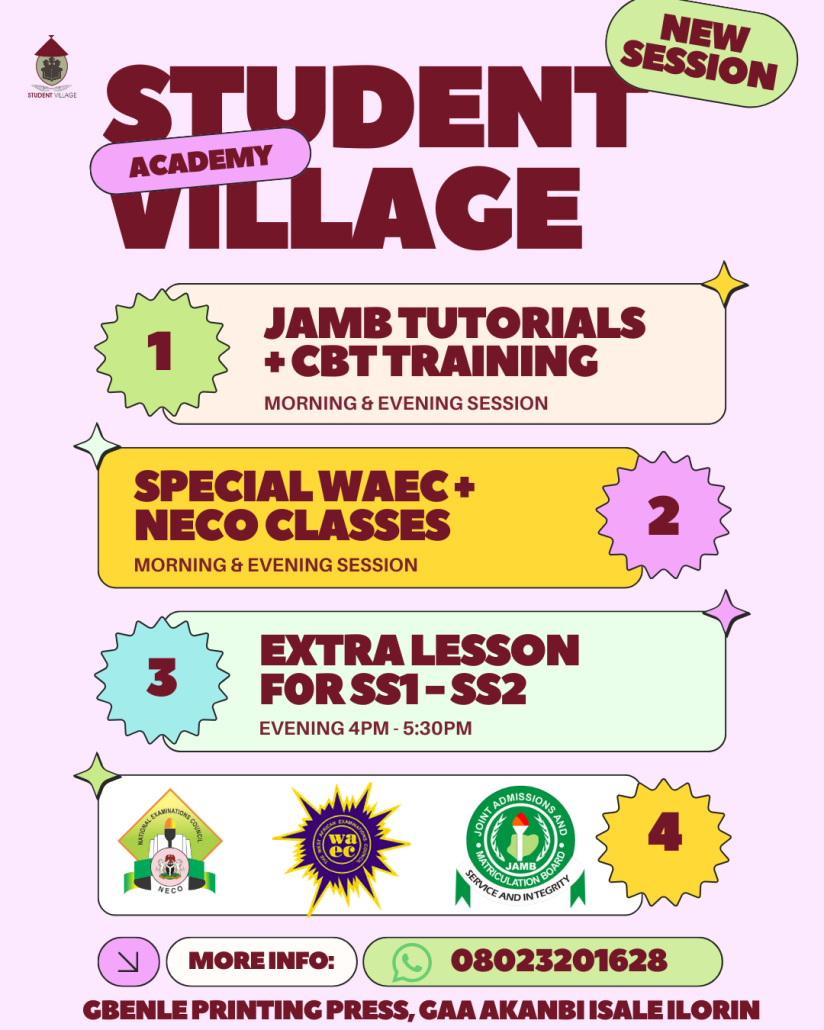
What makes Student Village Academy exceptional is its holistic approach. It is not merely a tutorial center — it is a well-designed system for producing consistently high results.
A 12-Week Mastery Curriculum
Covering the entire UTME syllabus with scientifically-backed methods, the curriculum emphasizes comprehension, speed, and confidence.
Exam Hall Simulation
The academy’s CBT mock center provides an environment identical to JAMB’s settings. Students write multiple full-length tests until the format becomes instinctive.
Personal Mentorship & Academic Counseling
Students have access to tutors who provide feedback, motivation, and correction during their preparation journey.
International Opportunities
Students who excel in UTME are guided through foreign scholarship pathways and global university applications, giving them options far beyond Nigeria’s borders.
Conclusion: The Truth About Scoring 300+
Scoring above 300 in the UTME is not a miracle. It is the result of a well-structured strategy built on cognitive principles, consistent practice, and proper guidance.
Students who approach the exam scientifically, rather than emotionally, find that excellence is not only possible — it is predictable.
At Student Village Academy, this is the mission:
to transform exam success from guesswork into a system that any student can master.