Master Your Productivity with the Pomodoro Technique. The Pomodoro Technique, a time management method developed by Francesco Cirillo in the late 1980s, has transformed the way millions approach productivity. Named after the Italian word for tomato (“pomodoro”)—inspired by Cirillo’s tomato-shaped kitchen timer—this technique breaks work into focused intervals (typically 25 minutes) followed by short breaks to boost concentration and prevent burnout.
This guide provides a refined, professional overview of the Pomodoro Technique, incorporating insights from various sources to offer a clear, actionable, and engaging approach to maximizing productivity.
What is the Pomodoro Technique?
The Pomodoro Technique is a structured time management system designed to enhance focus, reduce distractions, and promote sustainable productivity. It involves working in short, timed intervals—called “pomodoros”—typically lasting 25 minutes, followed by a 5-minute break. After completing four pomodoros, a longer break of 15–30 minutes is taken to recharge. This method is particularly effective for individuals who:
- Struggle with distractions derailing their workday.
- Tend to overwork, leading to mental fatigue or burnout.
- Manage open-ended tasks, such as research or studying, that can consume unlimited time.
- Procrastinate due to feeling overwhelmed by large projects.
- Enjoy gamified goal-setting or structured routines.
By breaking tasks into manageable chunks, the Pomodoro Technique fosters a sense of urgency, improves time awareness, and encourages consistent progress without the stress of marathon work sessions.
The History of the Pomodoro Technique
Developed by Francesco Cirillo during his university years, the Pomodoro Technique was born out of a need to combat overwhelm and maintain focus amidst demanding academic schedules. Cirillo challenged himself to focus for just 10 minutes using a tomato-shaped kitchen timer, which sparked the creation of this now widely adopted method. Its simplicity—detailed in Cirillo’s 160-page book, The Pomodoro Technique—has made it accessible to professionals, students, and anyone seeking to optimize their time.
How to Use the Pomodoro Technique: Step-by-Step
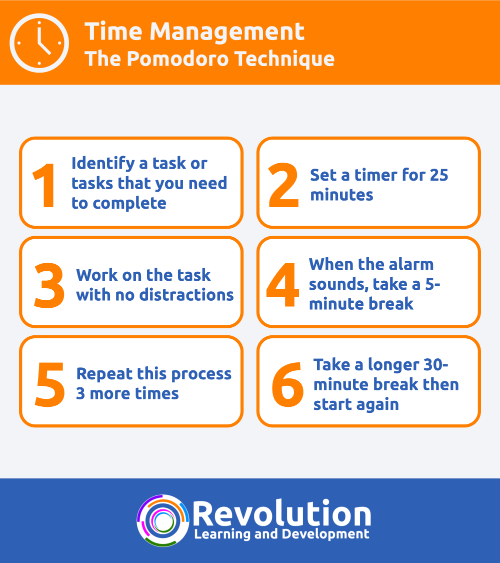
Follow these six steps to implement the Pomodoro Technique effectively:
- Identify Tasks: Select a task or group of tasks to complete. Break large projects into smaller, actionable steps that can be accomplished within one or two pomodoros. For example, instead of “write a report,” focus on “draft the introduction.” Prioritize tasks using tools like the Eisenhower Matrix to focus on high-impact activities.
- Set a Timer: Set a timer for 25 minutes using a phone, physical timer, or Pomodoro app (e.g., BreakTimer, FocusBox, or Llama Life). Place the timer where it’s audible but not visible to avoid distraction from watching the clock.
- Work with Focus: Concentrate solely on the chosen task for the 25-minute period. Avoid multitasking, and if unrelated ideas or tasks arise, jot them down in a notebook or digital tool like Todoist for later review.
- Take a Short Break: When the timer rings, stop working and take a 5-minute break. Step away from your workspace, stretch, hydrate, or engage in a non-screen activity to refresh your mind.
- Repeat the Cycle: Complete four pomodoros, repeating steps 2–4. After the fourth pomodoro, take a longer break of 15–30 minutes to recharge fully.
- Track and Reflect: Record completed pomodoros and tasks to monitor progress. Reflect on interruptions or challenges to refine your approach for future sessions.
Three Core Rules for Maximum Productivity
To ensure the Pomodoro Technique delivers optimal results, adhere to these key principles:
- Break Down Complex Projects: If a task requires more than four pomodoros, divide it into smaller, manageable steps. This ensures steady progress and prevents overwhelm.
- Group Small Tasks: Combine tasks that take less than one pomodoro (e.g., responding to emails, scheduling appointments) into a single session to maximize efficiency.
- Respect the Pomodoro: Once a pomodoro begins, it must run its full course. Avoid interruptions, such as checking emails or notifications. If an unavoidable disruption occurs, take a 5-minute break and restart the pomodoro. If you finish early, use the remaining time for overlearning (e.g., reviewing notes or researching related topics).
Why the Pomodoro Technique Works
The Pomodoro Technique’s effectiveness lies in its ability to align with human cognitive processes and combat common productivity pitfalls. Here’s why it stands out:
1. Simplifies Starting Tasks
Procrastination often stems from the overwhelming nature of large tasks. As noted by Tim Pychyl, a psychology professor and author of Procrastination, Health, and Well-Being, negative emotions associated with daunting projects trigger avoidance behaviors. The Pomodoro Technique counters this by shrinking tasks into small, unintimidating steps, making it easier to begin. For example, writing a single paragraph in 25 minutes feels far less daunting than tackling an entire report.
2. Combats Distractions
Research by Gloria Mark, a Professor of Informatics at the University of California, indicates that self-inflicted distractions account for half of workday interruptions. The Pomodoro Technique trains your brain to resist these impulses by dedicating each pomodoro to a single task and using breaks to reset focus. Tools like website blockers (e.g., Cold Turkey, Freedom) or focus music (e.g., Brain.fm) can further minimize external distractions.
3. Enhances Time Awareness
The planning fallacy—underestimating the time tasks require—plagues many. The Pomodoro Technique transforms time into a tangible unit of effort (a “pomodoro”), making it easier to estimate task durations accurately. As writer Dean Kissick noted, the structured breaks encouraged him to use time more intentionally, turning mundane activities into refreshing interludes.
4. Gamifies Productivity
The Pomodoro Technique turns work into a game by setting clear goals and rewarding progress with breaks. Challenging yourself to complete a set number of pomodoros or finish a task within a specific timeframe adds motivation and makes productivity engaging.
Six Tips to Optimize Your Pomodoro Sessions
To maximize the benefits of the Pomodoro Technique, consider these practical strategies:
- Prioritize Tasks Strategically: Use frameworks like the Eisenhower Matrix to focus on high-priority tasks. Avoid multitasking, as it disrupts deep focus and reduces efficiency.
- Eliminate Distractions: Silence notifications, use website blockers (e.g., Cold Turkey, Freedom), and consider focus music or apps like Brain.fm. Block focus time on your calendar to signal availability to colleagues.
- Customize Pomodoro Length: Experiment with intervals to suit your work style. For shallow tasks (e.g., emails), try 15–25-minute pomodoros. For deep work (e.g., coding, writing), extend to 50–90 minutes with 10–20-minute breaks. A DeskTime study suggests a 52-minute work/17-minute break cycle for optimal productivity, though preferences vary.
- Take Refreshing Breaks: Use breaks for non-screen activities like stretching, walking, or light exercise. Avoid engaging activities (e.g., social media, gripping TV shows) that may overrun your break time and disrupt focus.
- Track Productivity: Use tools like Reclaim.ai to analyze time spent on tasks versus meetings, helping you refine Pomodoro estimates. Log completed pomodoros to assess progress and adjust planning.
- Automate with Tools: Integrate the Pomodoro Technique with task management apps like Todoist or Reclaim.ai. These tools allow you to schedule tasks, estimate pomodoros, and block focus time. Alternatively, use Pomodoro timers like Flowmo, Toggl Track, or YouTube Pomodoro videos with background music (e.g., lo-fi or brown noise).
Potential Drawbacks and Solutions
While highly effective, the Pomodoro Technique has limitations to consider:
- Task Interruptions: Frequent breaks can disrupt flow, especially for creative or complex tasks. Solution: Extend pomodoro length for deep work or skip breaks when in a flow state, resuming the cycle after a longer break.
- Mental Fatigue: Overloading pomodoros can lead to exhaustion. Solution: Limit daily pomodoros to 12–14 for an 8-hour workday, incorporating 2–4 overflow pomodoros for unexpected tasks.
- Scheduling Around Meetings: Meetings can fragment focus time. Solution: Block Pomodoro sessions on your calendar as non-negotiable commitments to protect your productivity.
How to Integrate the Pomodoro Technique with Todoist
To seamlessly incorporate the Pomodoro Technique into your workflow using Todoist, follow these steps:
- Plan Your Day: At the start of each day (or the night before), review your tasks and assign them to the “Today” view. Estimate pomodoros for each task, adding tomato emojis (🍅) to indicate duration (e.g., “Draft report 🍅🍅”). Break tasks requiring more than four pomodoros into smaller sub-tasks.
- Schedule and Prioritize: Drag tasks in your “Today” view to reflect the order of completion. Use labels like “@on_deck” for secondary tasks. Ensure no more than 12–14 pomodoros are scheduled daily, postponing less urgent tasks as needed.
- Work and Track: Use a Pomodoro timer (e.g., Flowmo, Llama Life) to time sessions. Add interruptions or new tasks to your Todoist Inbox for later scheduling. If you finish a task early, use the remaining time for overlearning or low-priority tasks.
- Build a Routine: Create a recurring Todoist task (e.g., “Plan pomodoros every weekday”) to establish a daily planning habit. Reflect on completed pomodoros to improve focus and task estimation over time.
Why Try the Pomodoro Technique?
The Pomodoro Technique is a versatile and accessible tool that transforms how you approach work. By breaking tasks into focused sprints, it combats procrastination, minimizes distractions, and fosters sustainable productivity. Whether you’re a professional managing tight deadlines, a student tackling study sessions, or anyone seeking better time management, this method offers a structured yet flexible framework to achieve your goals.
Experiment with the Pomodoro Technique for a week to assess its impact. Track your progress, adjust intervals to suit your needs, and integrate tools like Todoist or Reclaim.ai for seamless execution. As Francesco Cirillo’s simple tomato timer proved, small changes can yield significant results. Start today and discover how thinking in “tomatoes” can revolutionize your productivity.