
Student Village Academy › Forums › ENTERTAINMENT › Movies › Tyler Perry continues building his empire on Black pain
Tagged: Movies
- This topic has 0 replies, 1 voice, and was last updated 7 months, 4 weeks ago by
 Shekinah Brama.
-
AuthorPosts
-
-
July 20, 2025 at 8:58 PM #81172
 Shekinah BramaModerator
Tyler Perry has had a wild ride this year—and not in a good way. On Friday, June 13th (yes, that Friday the 13th), the media mogul was slammed with a massive $260 million lawsuit by actor Derek Dixon. Dixon, who appeared in Perry’s shows The Oval and Ruthless, accused Perry of creating “a coercive, sexually exploitative dynamic,” leading to claims of sexual harassment, battery, and assault. Not long after, The Hollywood Reporter published a detailed exposé, spotlighting a series of lawsuits and complaints against Tyler Perry Studios, mostly centered around unfair labor practices.
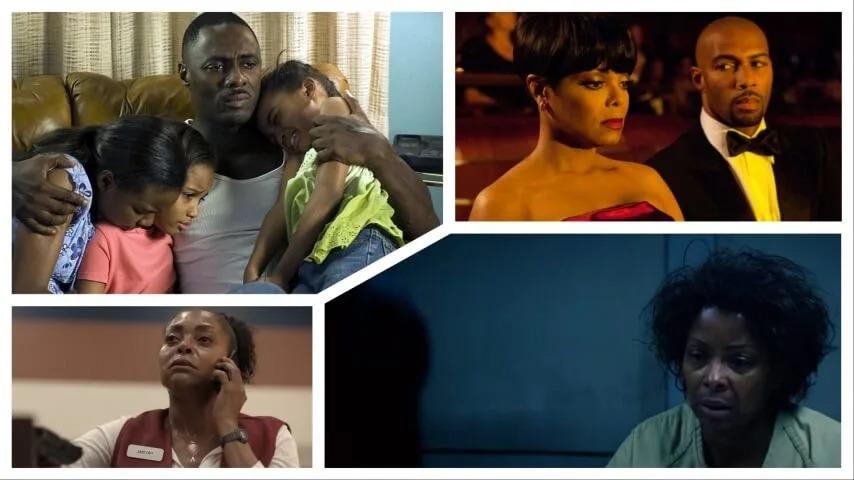
And yet, all this unfolded while Perry’s new film Straw dominated Netflix, sitting at the top of its English-language movie charts for weeks. Straw is a heart-wrenching drama that stars Taraji P. Henson as a single mom enduring the worst day imaginable—losing her job, her home, and her sick daughter, who’s taken by Child Protective Services. In a desperate, chaotic turn, she ends up robbing a bank (don’t ask) and holding people hostage, including the bank manager (Sherri Shepherd), while law enforcement closes in—led by Teyana Taylor’s character.
As expected from Perry, Straw drags its main character—and the audience—through a full emotional storm. The film delivers a devastating twist that has TikTok users posting stunned reactions from friends and family. It’s another entry in Perry’s long line of emotionally intense, often painful dramas that have built his billion-dollar brand.
Two decades ago, Perry made the leap from gospel stage plays to Hollywood with Diary of a Mad Black Woman, introducing the world to his most iconic character—Madea. That $5 million film grossed $50 million, kicking off a series of successful adaptations of his plays. Eventually, he took full creative control, writing, directing, and producing his own projects. By 2019, he had opened Tyler Perry Studios in Atlanta—where he makes almost all his content. His studio even gets rented out for big Hollywood projects like Black Panther and The Walking Dead.
But here’s the twist: Perry’s empire has been largely built on Black pain. His signature style? Black characters—especially women—going through relentless hardship. A woman is slightly overweight? Her husband cheats and belittles her. A woman cheats? She contracts HIV. A single mom trying to survive? Her kids are murdered by her partner (yes, that happened).
Perry, a devout Christian, often crafts stories where characters get punished for straying from godly values. But Straw shows that even faithful women aren’t spared; Perry is quick to drag his heroines—and his viewers—straight to the brink.
Over the years, critics—from journalists to TikTokers—have questioned Perry’s obsession with suffering. Nigerian film critic Brooks Eti-Inyene wrote, “In Perry’s world, pain isn’t just a narrative device—it’s the entire plot.” His characters, particularly women, rarely grow through adversity; they’re trapped in it. As Eti-Inyene put it, “Redemption only comes after the world has chewed you up and spat you out.” Media commentator The PrideBrarian said it more bluntly: “Perry builds his empire on stereotypes, humiliating us in the process.”
Jourdain Searles, a film critic and contributor to The A.V. Club, stopped watching Perry’s work after enduring Acrimony, another drama starring Henson. “I used to watch everything he made,” she says. “But I got tired and honestly offended that he refuses to evolve or take his work more seriously.”
Perry’s recent move to release most of his content on streaming hasn’t helped. Production quality is slipping fast. Remember A Fall From Grace? He shot that entire Netflix film in five days. For someone two decades into Hollywood, Perry has shown little interest in growing as a filmmaker—or handing the reins to others who might do better. Unlike creatives like Jordan Peele, Issa Rae, or Donald Glover (who even spoofed Perry in Atlanta—with Perry’s knowledge), Perry isn’t known for collaboration or mentoring new Black talent.
His infamous “WORK ETHIC!!” post bragged that he writes, directs, and produces everything himself. The only exception? Peeples. As critic Searles notes, “He has no respect for cinema, for writers, or even for Black women. I don’t know if he respects anyone besides himself.”
Jay Jacksonrao, co-host of the Black On Black Cinema podcast, feels the same. He skipped reviewing Straw entirely, opting instead to highlight Hard Truths by Mike Leigh, which stars Marianne Jean-Baptiste as a struggling Black woman in London. Jacksonrao argues Perry could use his power and arrogance to actually uplift others. “Jordan Peele came in swinging, doing what Perry should’ve done a decade ago,” he says. “Come on, man. Use your power to do something amazing.”
As for the harassment claims, Jacksonrao and Searles agree—Perry will probably weather the storm. His fanbase is loyal, often religious, and deeply attached to his content. “He has a lot of protection,” Searles admits. She points to his odd, rambling speech at the 2025 BET Awards as a symbol of his unchecked power. “Then I realized—he’s a part owner of BET+. All their money is tied to him.”
Even if Perry ends up in a draining legal battle, odds are he’ll still profit, pumping out drama-heavy content for his eager audience. He’s also indirectly inspired a wave of low-budget Black filmmakers—many producing even more chaotic, less polished films flooding Tubi and other platforms. Movies like African American Psycho: The Hip Hop Freak (yes, that’s real) are just the latest example of what Perry’s influence has bred: viral clips from poorly made, stereotype-heavy films that mimic Perry’s model—high drama, low effort.
Since 2017, Perry has directed 14 films. Jordan Peele? Three. Steve McQueen? Three, plus a mini-series. Ava DuVernay? Just two. If Perry is so invested in stories about Black women, critics argue he should step aside and fund the voices of rising Black female filmmakers. Searles offers examples: “He’s in Atlanta—I’m from Georgia. Why hasn’t he worked with Channing Godfrey Peoples? Miss Juneteenth was a huge deal. Or Tayarisha Poe? She’s making beautiful films. It’s like he doesn’t even know—or care.”
Until Perry chooses to grow, mentor, or open the door to fresh talent, his legacy may end up as problematic as the stories he tells. As Searles puts it, “He’s not interested in nurturing others—because he hasn’t developed his own talent.”
-
-
AuthorPosts
- You must be logged in to reply to this topic.