
Student Village Academy › Forums › Money / Savings › Money Talks › The World’s Wealthiest People You’ve Never Heard Of
Tagged: Money, money talks
- This topic has 2 replies, 2 voices, and was last updated 4 months, 3 weeks ago by
 Gigabyte Computer Solutions.
-
AuthorPosts
-
-
October 28, 2025 at 3:11 PM #84978
 justseyiKeymaster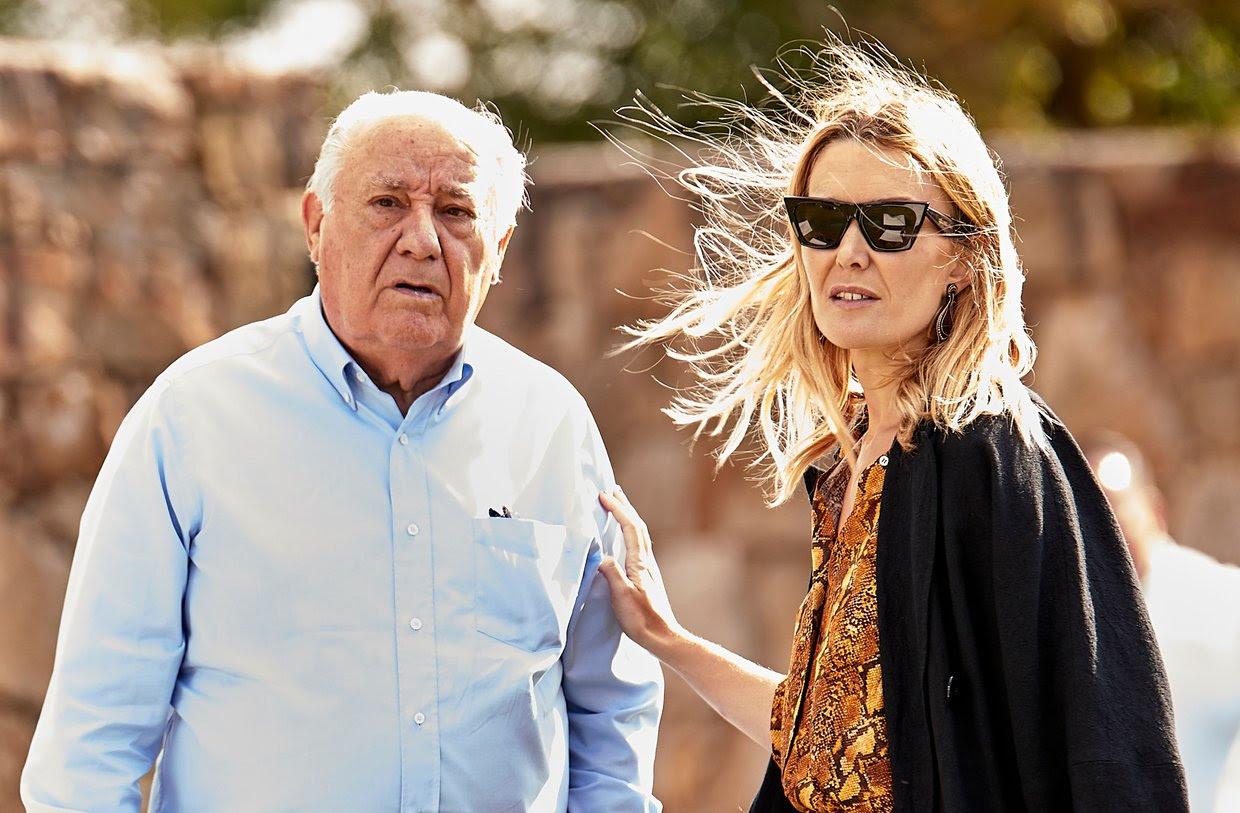
You’ve heard of Elon Musk’s Mars dreams or Jeff Bezos’s yacht parties—they’re the billionaires who crash your feed with every tweet or launch. But for every headline-grabber, there are dozens more shaping the world from the shadows, their fortunes as vast as their anonymity.
These are the ultra-rich who could buy your neighborhood without breaking stride, yet you’d pass them in a coffee shop without a second glance. Bloomberg’s latest Billionaires Index shines a light on six such enigmas, whose combined wealth rivals small countries. From Walmart dynasties to Red Bull heirs, here’s a peek at the power players who prefer the boardroom to the spotlight.
The Non-Royal Royals: The Walton Siblings and Their $432 Billion Empire
Meet the Waltons—Jim, Rob, and Alice—the siblings who turned a 1962 Arkansas discount store into a global behemoth, amassing a collective $432.4 billion as of December 2024 (per Forbes, with 2025 projections holding steady amid Walmart’s e-commerce surge). That’s more than the GDP of Greece, Hungary, or Iran combined, all from the family that owns 45% of Walmart, the world’s largest retailer with 10,500+ stores across 19 countries.Papa Sam Walton started it all with a simple ethos: low prices, everyday low drama. Today, the heirs embody quiet dominance. Alice, the world’s richest woman at $112.1 billion, has largely sidestepped the boardroom for her passion project: the Crystal Bridges Museum in Bentonville, Arkansas, a $1.5 billion art haven showcasing her private collection of American masters like Warhol and Pollock. It’s her way of laundering retail riches into cultural legacy—proving you can build an empire and a gallery in the same breath.
Jim and Rob, each worth around $113.3 billion, keep the family machine humming. Jim chairs Arvest Bank, a regional powerhouse with $26 billion in assets, while Rob, the quiet enforcer, oversees Walmart’s day-to-day ops. Together, they’ve navigated scandals (labor lawsuits, e-commerce wars) with the same folksy pragmatism that built the brand. No flashy divorces or Twitter feuds here—just steady stock gains (Walmart’s up 26% YTD) and a fortune that grows like compound interest on steroids. The Waltons don’t seek the spotlight; they own it, from Black Friday stampedes to your weekly grocery run.
Spain’s Silent Fashion King: Amancio Ortega’s $107 Billion Zara Dynasty
If your closet has a Zara tag, you’ve unknowingly bankrolled Amancio Ortega, Spain’s stealthiest billionaire with a $107 billion net worth (Forbes, May 2025). The 89-year-old founder of Inditex—the world’s largest clothing retailer—controls 59.3% of a $41.6 billion empire spanning seven brands, including Zara, Pull&Bear, and Massimo Dutti. That’s 7,400+ stores hawking fast fashion to 200 million shoppers yearly.Ortega’s genius? Revolutionizing “fast fashion” in the ’70s: spot a trend in Paris, prototype in Galicia, ship globally in weeks. No middlemen, no waste—just shelves stocked with €20 jackets that look €200. His puffer you snagged last weekend? It contributed to $400 million in annual dividends he plows into real estate (he owns Madrid’s Torre Picasso skyscraper and Miami’s Epic Residences).
The reclusive Galician lives modestly in A Coruña, sipping coffee with employees in his local café. His daughter Marta, 40, now steers Inditex as chairwoman, blending dad’s efficiency with her style savvy. Philanthropy? €20 million to Caritas in 2012, plus the Amancio Ortega Foundation’s education push. Ortega’s not chasing headlines—he’s chasing margins, turning threads into a textile throne worth more than Spain’s entire luxury sector.
The Digital Trading Pioneer: Thomas Peterffy’s $82.8 Billion Wall Street Revolution
Thomas Peterffy arrived in America penniless at 21, a Hungarian immigrant fleeing Soviet shadows with $100 in his pocket. By 2025, he’s the 22nd-richest person globally at $82.8 billion (Forbes, October 2025), the architect of electronic trading who turned Wall Street’s chalkboards into algorithms.Peterffy’s breakthrough? In 1977, he bought a seat on the American Stock Exchange and coded the first handheld computers for floor traders—beating the NYSE’s clunky systems by years. His brainchild, Interactive Brokers, now serves 2.5 million clients with low-cost, high-speed platforms, raking in $4.3 billion annually. It’s the go-to for sophisticated traders, powering everything from day flips to hedge fund empires.
The 90-year-old Floridian (he owns 560,000 acres there, more than some counties) is a self-made machine: drafted bridges by day, programmed by night. His 2012 GOP ads warned of “creeping socialism,” but his real legacy is democratizing finance—making billion-dollar bets accessible to the masses. Peterffy’s not flashy (no yachts, just jets), but his code reshaped markets, turning a penniless kid into a trading titan.
TikTok’s Shadow Emperor: Zhang Yiming’s $65.5 Billion ByteDance Juggernaut
At 42, Zhang Yiming is China’s quietest tech overlord, wielding a $65.5 billion fortune (Forbes, May 2025) through ByteDance, the parent of TikTok and its domestic twin Douyin. The Beijing native co-founded the company in 2012 from a four-bedroom apartment, blending AI algorithms with addictive short-form video to hook 1.7 billion users worldwide—more than Instagram and Facebook combined.Zhang’s magic? News aggregator Toutiao (launched 2012) used machine learning to curate feeds before algorithms were cool, exploding to 13 million daily users in two years. TikTok followed, turning dances and duets into a $155 billion revenue machine (2024 figures). He stepped down as CEO in 2021 amid regulatory heat but remains the visionary steering a $378 billion valuation (Bloomberg, March 2025).
The Singapore-based recluse mandated his execs make TikToks (pushups for low likes)—a quirky rule that birthed global virality. Now, ByteDance’s Lark app targets U.S./European productivity, while AI chatbot Doubao serves 75 million users at 85% below industry costs. Zhang’s not chasing fame; he’s chasing feeds, turning scrolls into a social media supremacy worth more than many nations’ GDPs.
Candy Kings in Hiding: The Mars Siblings’ $133.8 Billion Sweet Secret
John and Jacqueline Mars—brother and sister helming the third generation of their family’s confectionery colossus—are worth a combined $133.8 billion (Forbes, September 2025), making them the second-richest U.S. family after the Waltons. Their empire? Mars Inc., the privately held behemoth churning out M&Ms, Snickers, Twix, Orbit gum, and Pedigree kibble from a logo-less HQ in McLean, Virginia.Grandpa Frank Mars whipped up the Milky Way in 1923 from his kitchen; by 2023, sales hit $50 billion across 80 countries. The siblings, each around $39.2–$42.6 billion individually, keep it low-key: Jacqueline’s into equestrian pursuits and philanthropy, John oversees ops with zero fanfare. No public spats, no Instagram flexes—just quiet control of candy aisles worldwide.
Their secret sauce? Diversification: 35% snacks, 35% petcare, the rest gum and vets. Recent deals like the $36 billion Kellanova buy (2024) ballooned revenue, but they shun spotlights—family privacy is paramount. The Mars duo doesn’t court cameras; they conquer counters, turning chocolate drops into a fortune sweeter than any Easter basket.
Red Bull’s Reluctant Heir: Mark Mateschitz’s $40.6 Billion Inheritance
At 33, Mark Mateschitz is the 31st-richest person alive with $40.6 billion (Forbes, April 2025), inheriting 49% of Red Bull GmbH after his father Dietrich’s 2022 death. The Austrian energy drink dynasty—co-founded in 1987 with Thai mogul Chaleo Yoovidhya—sold 12.7 billion cans in 2024, raking $12.1 billion in revenue and fueling extreme sports from F1 to cliff diving.Mark stepped back from organics oversight to focus on stewardship, but his mark is indelible: In March 2025, he snapped up Bernie Ecclestone’s £500 million F1 car collection (69 vintage racers, including Schumacher’s 2002 Ferrari). It’s a nod to Red Bull Racing’s Verstappen-fueled dominance, blending heritage with horsepower.
The Salzburg-based heir shuns publicity—unlike dad’s flamboyant sponsorships (Felix Baumgartner’s space jump). Mark’s pushing sustainability in energy drinks and media, but his wings are inherited: a 49% stake that gives him global lift without the spotlight. Mateschitz doesn’t chase adrenaline; he owns it, turning caffeine into a $40 billion empire one can at a time.
-
October 30, 2025 at 3:05 PM #85015
 Shola joshuaModerator
with all the money Bola Ahmed Tinubu has taken from Nigerians, he still didn’t make the list
-
October 31, 2025 at 9:45 AM #85019
 Gigabyte Computer SolutionsModerator
lol, the list doesn’t include blood money na
-
-
-
AuthorPosts
- You must be logged in to reply to this topic.