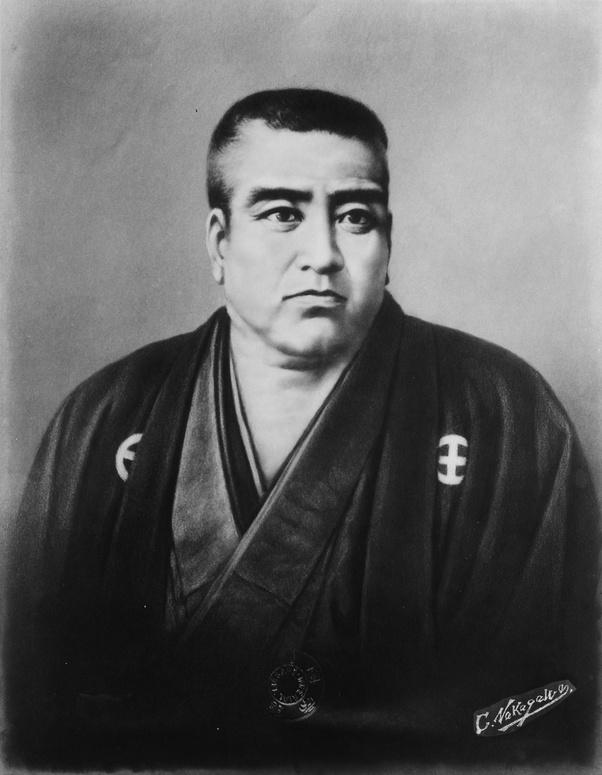
Saigō Takamori was a renowned samurai leader during the Meiji era. In 1877, he led a band of loyal samurai in rebellion against the swiftly modernizing Japanese state. The uprising was doomed from the start. Takamori and most of his men were cut down in battle. Mortally wounded, Takamori followed the old code of honor—he asked a trusted officer to help him commit seppuku, after which his head was taken away by allies to preserve his dignity.
That left government troops with a problem: how to identify the body of the famed rebel without its head. Many of the slain warriors shared Takamori’s imposing size and build. Without his familiar face, how could they be sure which body was his?
The answer came from an unexpected source—a former mistress. She revealed that Takamori could be recognized by an unusual physical trait: in his youth, he had suffered a bacterial infection that left him with an abnormally large scrotum, forcing him to walk bow-legged for much of his life. Despite this, his virility was never in doubt—he had three wives, five children, and numerous concubines.
And so, when the bodies of the fallen samurai were stripped after the final charge, it was this peculiar characteristic that confirmed the identity of Saigō Takamori—remembered by history as “the last samurai.” A bizarre little tale I had never heard until recently. Now, unwillingly, you’ve heard it too.
 .
.
