
Student Village Academy › Forums › TECH AND GADGETS › Hands-On with Snap OS 2.0: The Update That Could Change Smart Glasses Forever
- This topic has 1 reply, 1 voice, and was last updated 6 months, 3 weeks ago by
Bob Brown.

-
AuthorPosts
-
-
September 15, 2025 at 3:26 PM #83659
 justseyiKeymaster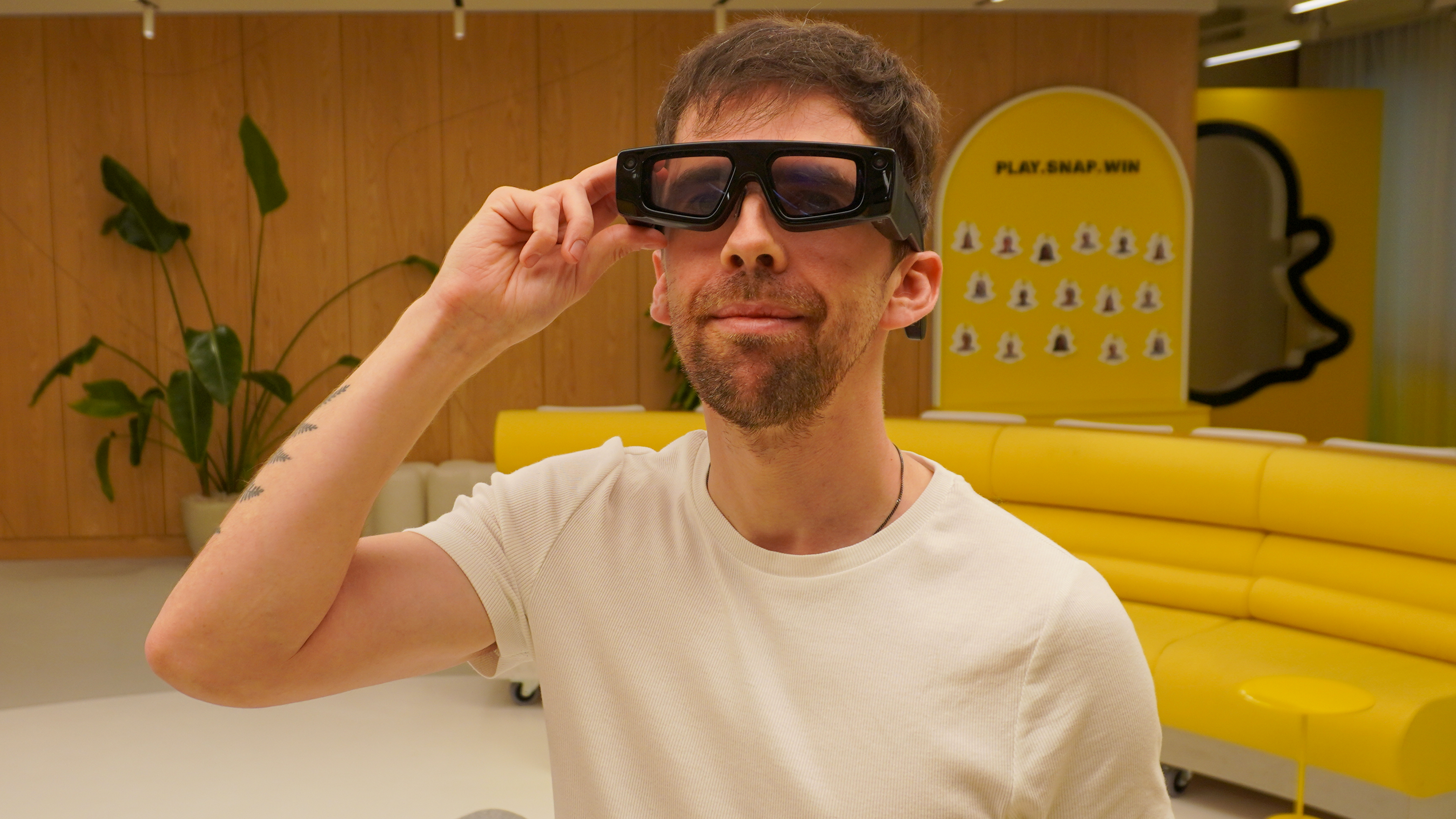
A first look at the future of smart glasses suggests it’s not an accessory for a phone. For years, the promise of augmented reality has been tethered to our smartphones, but a recent demo of Snap OS 2.0 indicates the next generation is finally here.
Snap Specs are set to launch for consumers in 2026, powered by software that was recently demonstrated to the press. For the first time, AR and on-device AI have come together in a way that appears truly game-changing, thanks to Snap’s massive ecosystem of Lenses. This is a whole new paradigm for smart glasses.
VR Smarts in a Sleek Pair of Glasses
Every pair of smart glasses available today, from the slick Ray-Ban Metas to the impressive Rokid Glasses, shares a fundamental crutch: they rely on a connected phone or a separate processing “puck.” This introduces latency and shatters the dream of one day leaving the phone behind.
Snap is rewriting that rule. The upcoming consumer Specs pack everything needed into the glasses themselves. The hardware includes dual Snapdragon processors, four cameras (including two for infrared computer vision), stereo speakers, a six-microphone array, and waveguide displays with a 46-degree field of view.
The result is the power of a VR headset in a form factor that can be worn anywhere. This isn’t just a screen for your face; it’s true, untethered spatial computing. This is the consumer vision many have been waiting for, and it’s a mighty impressive one.
The Future in Your Field of View
Snap OS 2.0 brings this hardware to life with a suite of apps that feel like science fiction.
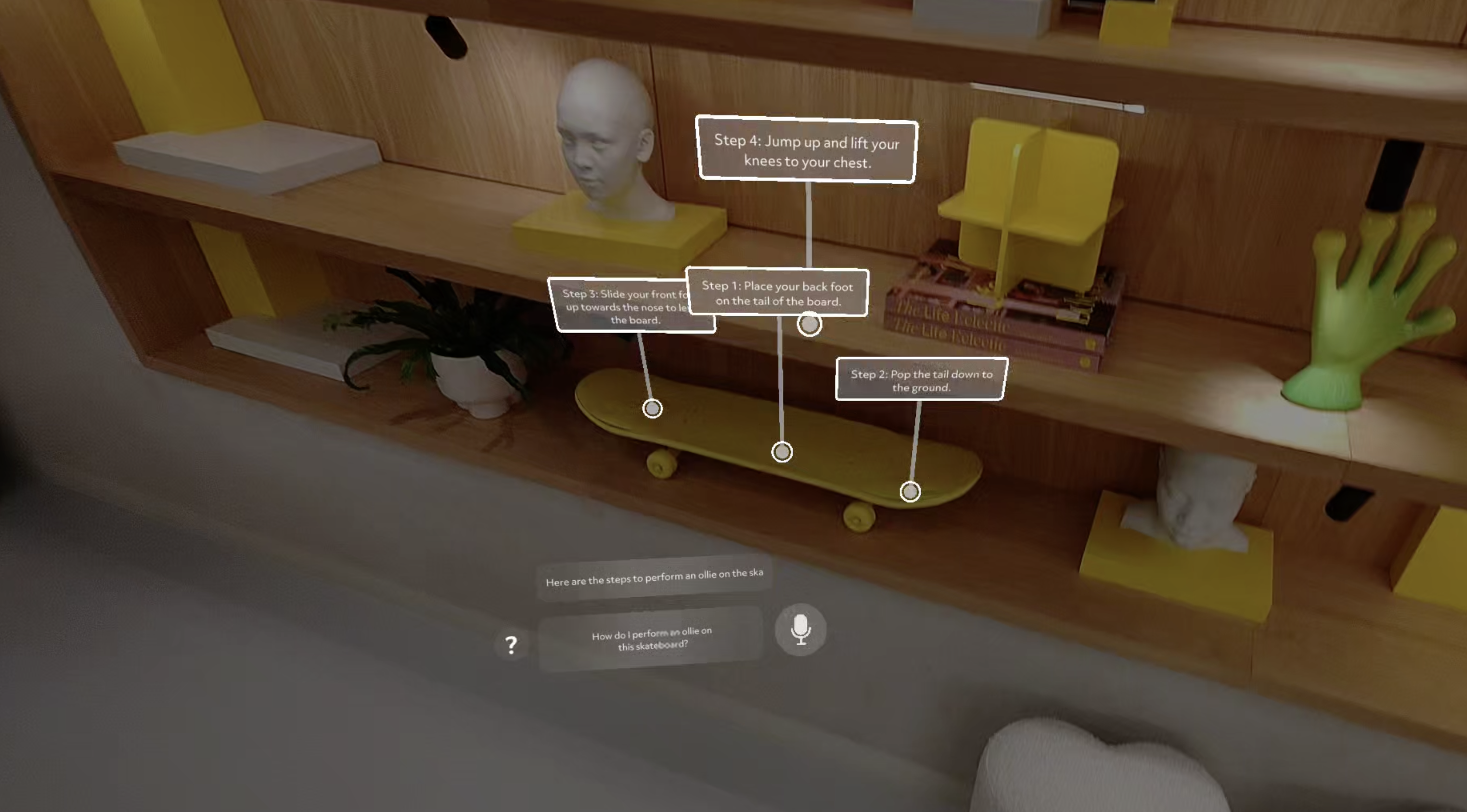
1. Spatial Tips: An AI-Powered Guide The first demo showcased an app called Spatial Tips, which uses multimodal AI to understand what the user is seeing and give them advice. It’s one thing to hear instructions on how to do a skateboard ollie; it’s another to see AR overlays on the board itself, showing exactly where to place one’s feet and push off. The object recognition is instantaneous, pinning smart labels to whatever the user is looking at.
2. Translation Lens: A Universal Translator On-device translation is exploding, but the social interaction is often awkward. Snap’s Translation Lens solves this beautifully by providing real-time subtitles that are pinned to the person speaking, allowing a user to follow a conversation between multiple people without missing a beat.
Its visual intelligence is also lightning-fast. Pinching and dragging over a menu written in Mandarin caused the Specs to instantly photograph and translate the entire document into English.
3. A Truly Spatial OS Beyond the standout apps, Snap is building a full-fledged operating system for your eyes. The Spectacles Browser is now significantly faster, and users can pin windows anywhere in their space. Director of Computer Vision Qi Pan confirmed that multi-tab support is in the works. The new Gallery Lens lets users see their entire camera roll in a stunning spatial environment, and the integrated Snapchat Collection brings the platform’s vertical video right into the line of sight.
Fitness Without the Face-Hugger
The final demo featured the rhythm game Synth Riders. Beyond the fun of the game, it revealed a huge opportunity: fitness. Apps on the Meta Quest 3 try to gamify workouts, but exercising with a bulky VR headset is not comfortable.
That all changes when the computer is the size of glasses. The potential for at-home fitness is massive. During the demo, the writer hit a high score of over 7,000, but the battery died just as the playthrough finished—a clear example of the current device’s stamina limits.
The Reality Check: Size and Power
This brings us to the biggest obstacle: building hardware that is sleek, stylish, and powerful enough for all-day use. As Snap’s VP of Hardware, Scott Myers, acknowledges, shrinking all this tech while extending battery life is the core challenge. The current developer Spectacles last about 45 minutes, which won’t be enough for consumers. However, the team at Snap insists they have a plan to meet that challenge.
Outlook
The experience left a lasting impression. Every demo of Snap’s tech seen before was a proof of concept. This was different. For the first time, a cohesive consumer vision for Snap Specs was on full display, powered by Snap OS 2.0. It’s an incredibly impressive glimpse into a future where the world is the interface, no smartphone required.
-
September 15, 2025 at 5:36 PM #83661
Bob Brown
ParticipantThis sounds groundbreaking untethered AR with on-device AI? The translation lens alone could kill language barriers in real life. Battery life’s a bummer at 45 mins, but if they nail the hardware, this might actually make smart glasses mainstream. Excited for 2026!
-
-
AuthorPosts

- You must be logged in to reply to this topic.