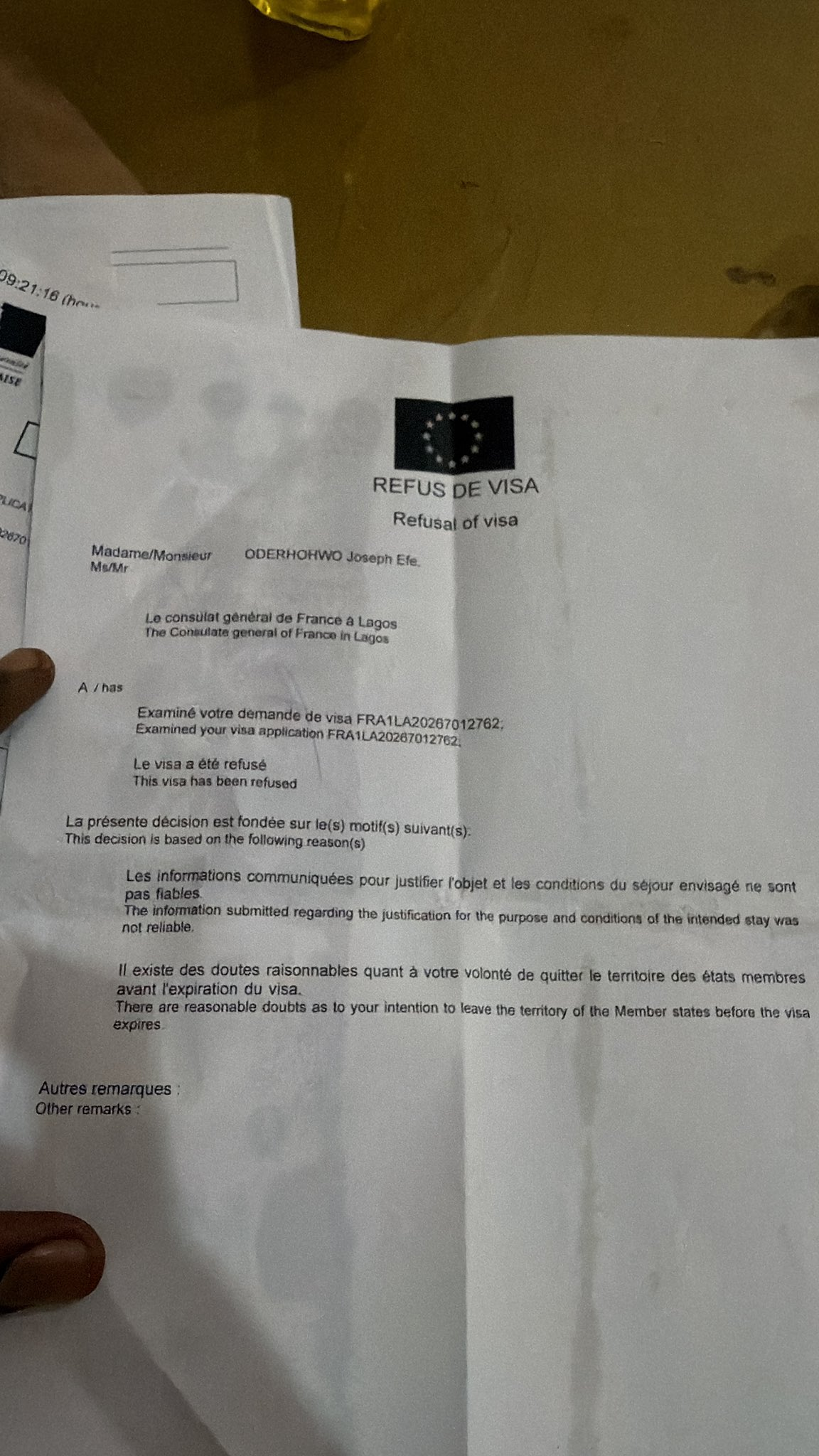
Why Carter Efe Was Refused a Schengen Visa. When news circulates that a public figure like Carter Efe has been denied a Schengen visa, it often sparks confusion and speculation. However, in most cases, visa refusals are not personal—they are procedural. Understanding the likely reasons behind such decisions can help others avoid similar outcomes.
One of the most common reasons for a Schengen visa refusal is insufficient proof of strong ties to one’s home country. The Schengen visa system is designed to ensure that applicants will return to their country after their visit. If the embassy is not convinced of this, the application is often denied.
For individuals in traditional employment, this is usually straightforward. A signed leave letter from an employer, confirming continued employment after the trip, serves as clear evidence. Students can provide enrollment verification to show they are expected back in school.
However, for creatives like Carter Efe—who operate outside conventional employment structures—the burden of proof is different and often more complex. Without a formal employer or institutional attachment, the embassy requires alternative forms of evidence to establish stability and rootedness.
This is where many applications fall short.
Artists, entertainers, and digital creators are expected to demonstrate that their career, income, and professional commitments are firmly based in their home country. This can include:
To strengthen an application as a creative, the focus should be on translating your career into verifiable proof:
A. Show Professional Legitimacy
- Business registration or tax identification
- Evidence of earnings or financial activity
- A portfolio or online presence that confirms your work
This tells the embassy: this is not a casual activity, but a real and established career.
B. Prove Your Life Is Rooted at Home
- Ongoing projects based in your home country
- Business operations or partnerships
- Evidence that your primary income is locally anchored
The goal is to demonstrate that your success is tied to where you live—not something you can easily abandon.
C. Present Clear Future Commitments
This is often the most important part.
- Signed contracts
- Scheduled performances or appearances
- Event flyers, bookings, or production timelines
These show that your return is not optional—you have responsibilities waiting.
Perhaps most importantly, embassies look for proof of future obligations—such as signed contracts, scheduled performances, event bookings, or promotional materials for upcoming projects. These elements signal that the applicant has clear reasons to return home.
In cases like this, a visa refusal does not necessarily mean the individual is unqualified to travel. It often indicates that the application did not sufficiently communicate these ties in a way that meets embassy standards.
For aspiring applicants, the takeaway is clear: beyond financial capability and travel intent, the strength of your application lies in how convincingly you can show that your life is firmly anchored at home—and that you have every reason to return to it.
Understanding this can make the difference between a rejection and an approval.